Walking Through Thai Art, Silk, and History
A Visit to Jim Thompson House & Museum, Bangkok
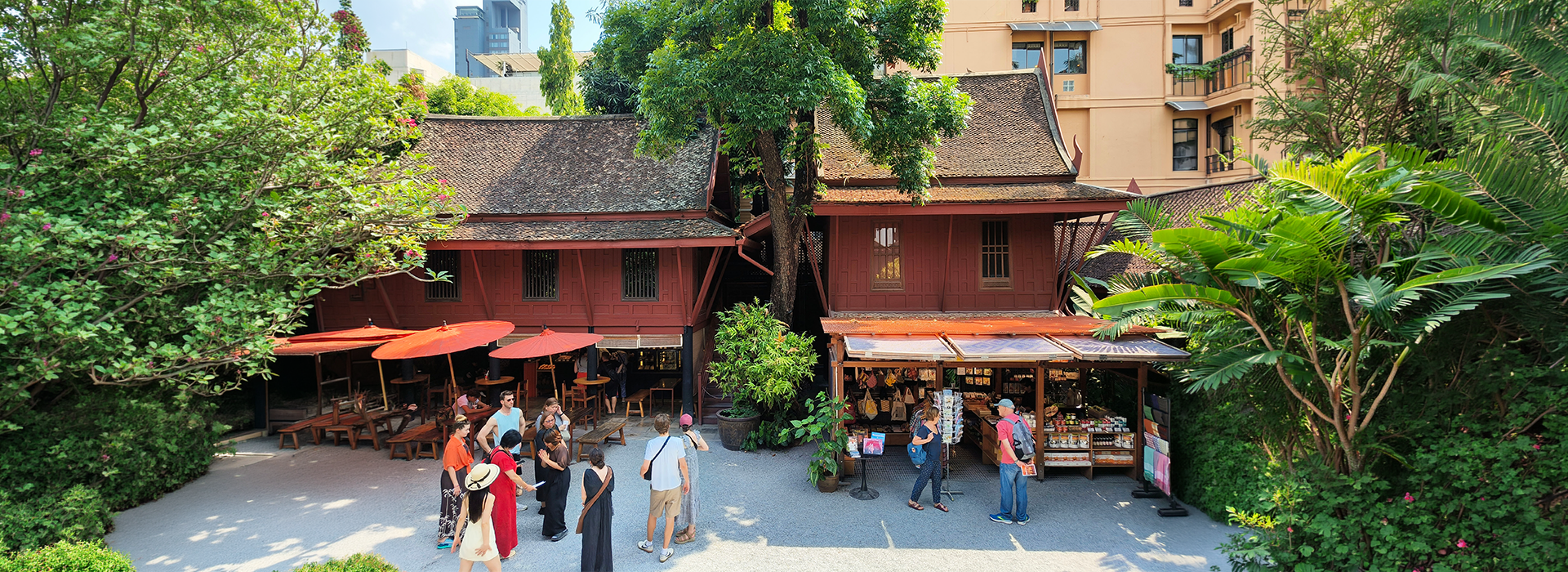
In the middle of busy Bangkok, not far from shopping districts and main roads, there is a place where time seems to slow down. Trees grow tall, wooden houses stand quietly, and a canal runs beside a traditional Thai house compound. This is Jim Thompson House & Museum, one of the places where visitors can experience Thai art, architecture, silk, and lifestyle all in one visit.
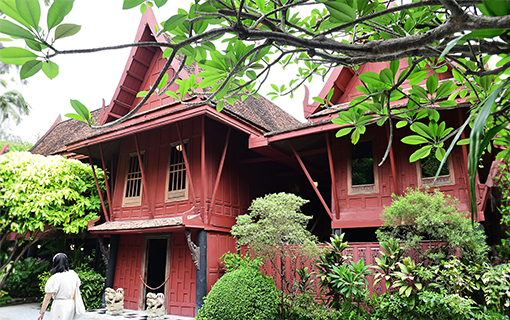
The large Thai-style house at Jim Thompson House is a beautiful example of traditional Thai architecture adapted for modern living.
Walking through the entrance, the main traditional Thai house is not immediately visible. Instead, two Thai-style buildings stand on both sides of the front area, creating a calm transition from the city into the museum space. Over the years, the trees have grown larger, making the entire area more shaded and peaceful, almost like a hidden garden in the city.
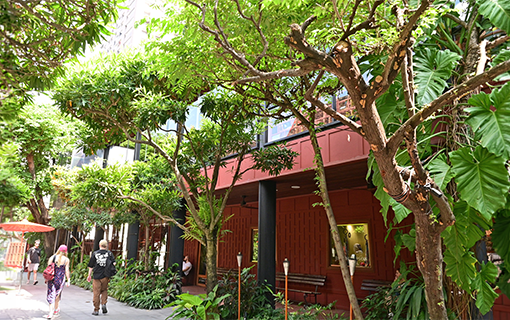
The building that houses the product display area and museum exhibition.
On the left side, the two-storey building is dedicated to Thai silk. The ground floor displays and sells silk products — the very silk that made Jim Thompson known worldwide. Thai silk here is not only a product, but a story of craftsmanship and community, especially the Ban Krua silk-weaving community across Saen Saep Canal.
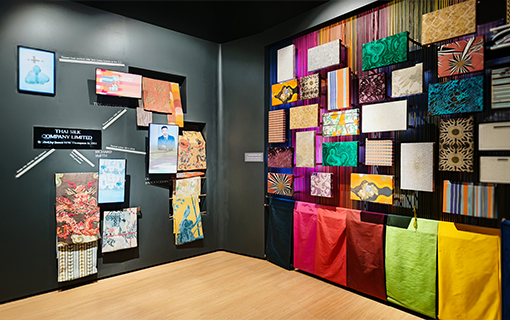
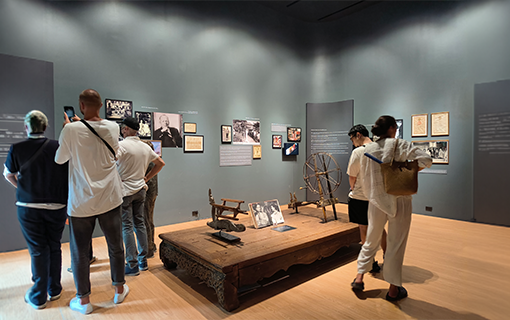
Exhibition displays inside the museum showcasing Thai silk, history, and art collections.
Exhibition displays inside the museum showcasing Thai silk, history, and art collections.
Upstairs, part of the space continues to display contemporary silk products, while the other part tells the story of Thai silk, from traditional weaving to its development into internationally recognized textile products.
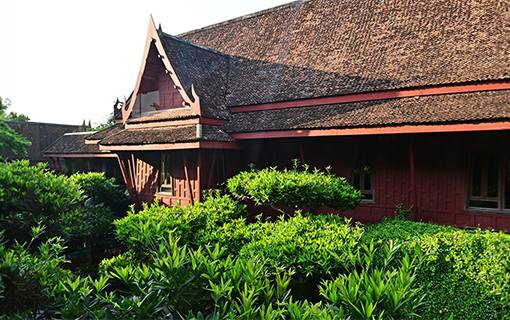
The restaurant building is designed in a Thai-style structure, viewed from the museum side on the second floor.
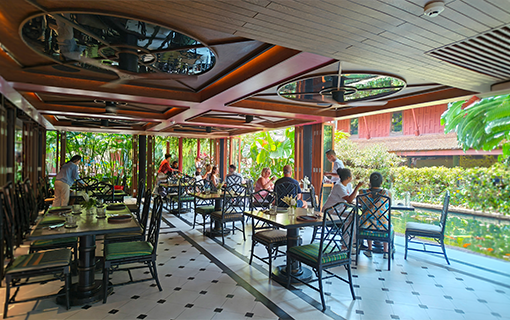
The restaurant on the ground floor is divided into two areas — an indoor dining area and an outdoor dining area.
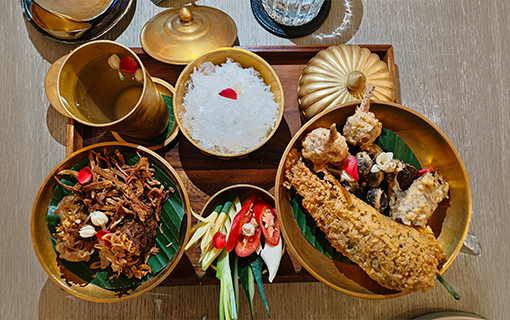
Khao Yum in Jim Thompson style is a Thai dish presented with herbs, rice, and colorful ingredients.
On the right side, another Thai-style building houses the restaurant. The upper floor is known as O.S.S. Bar, while the ground floor is Jim Thompson Thai Restaurant, serving traditional Thai cuisine. The atmosphere reflects a classic Thai dining setting, and the menu includes authentic Thai dishes such as Khao Chae and Tom Kha Gai, representing Thai culinary culture.
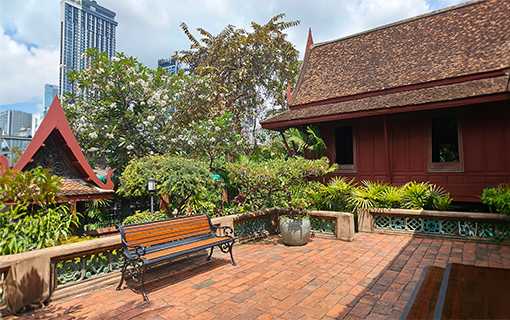
The wide wooden terrace in front of the main Thai house is a space that connects indoor living with the garden and canal.
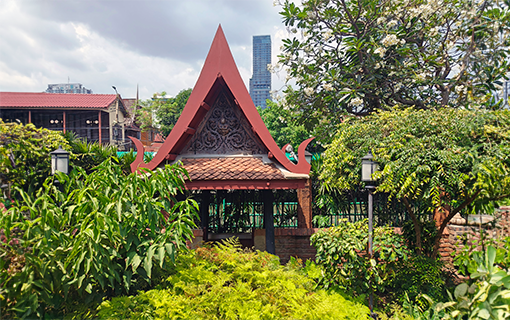
The pavilion in the garden beside the Saen Saep Canal is connected to the main house terrace. In the past, there was a small bridge here linking Jim Thompson’s house to the Ban Krua community across the canal.
Walking further inside, visitors will reach the heart of the museum — the traditional Thai houses. There is a smaller Thai house on the left and the main large Thai house on the right. The main house was originally an old Thai house from Ayutthaya, purchased in 1958 and reassembled here in Bangkok. Several traditional houses were combined into one compound, connected by terraces and surrounded by gardens beside Saen Saep Canal.
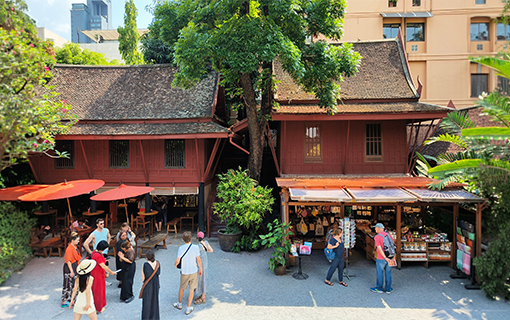
The smaller Thai house viewed from the main house. The souvenir shop is located on the right side.
The garden around the houses is shaded and calm, surrounding both the large and small Thai houses, making the entire area feel like a private residence rather than a museum.
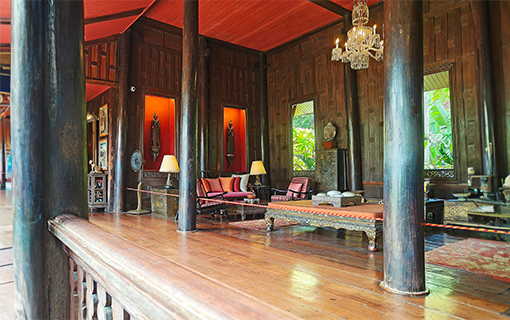
The main hall inside the large Thai house is the central space that connects different rooms within the traditional house.
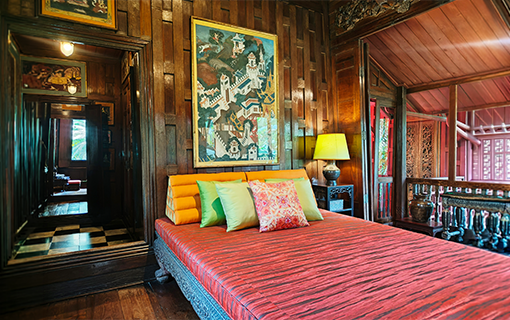
Jim Thompson’s bedroom is preserved almost exactly as it was, giving visitors a glimpse into his private living space.
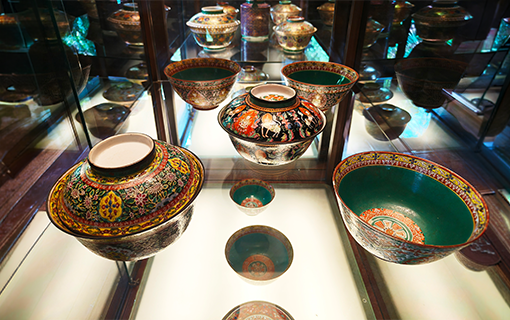
Antique Benjarong porcelain is displayed inside the main Thai house, representing traditional Thai ceramic craftsmanship.
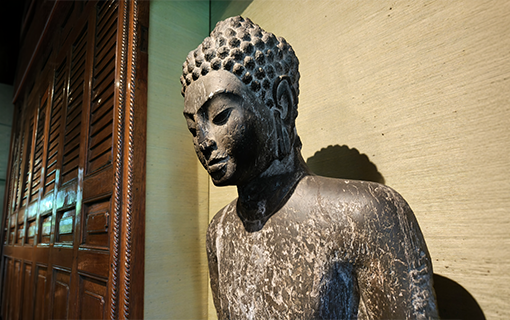
A Buddha sculpture is displayed inside the main Thai house, reflecting Southeast Asian art and religious heritage.
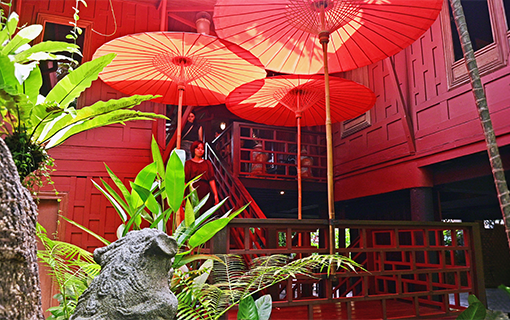
The staircase at the far end of the main Thai house connects different levels and walkways within the house compound.
Inside the main house, many valuable art and antique pieces are displayed — Buddha sculptures, Benjarong porcelain, paintings, and decorative objects from different periods across Southeast Asia. The rooms include a dining room, guest bedroom, and Jim Thompson’s own bedroom, all preserved almost as they were when the house was still a private residence. This makes the house feel alive, as if someone still lives there.
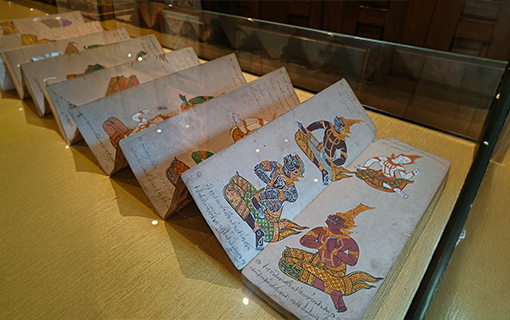
Folding paper paintings are displayed inside the smaller Thai house
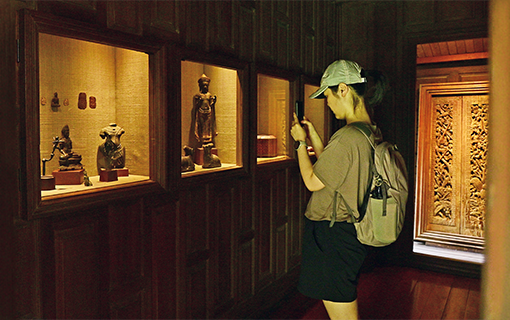
Khmer-style sculptures are displayed inside the smaller Thai house, showing the diversity of Southeast Asian art.
Around the compound, there are also small shops, a library near the entrance area, and koi ponds located between the main house and the restaurant building. Visitors can walk slowly through the gardens, across wooden walkways, and between the houses, experiencing Thai architecture, art, and nature together in one space.
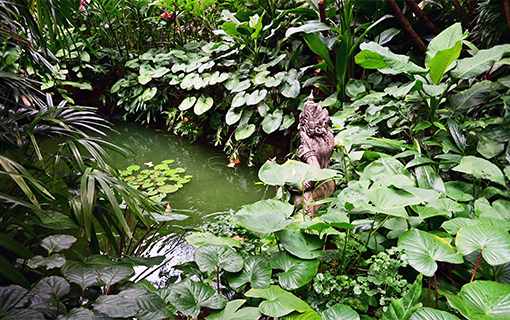
The peaceful garden is located at the far end of the property, surrounded by trees and traditional buildings.
More Than a Museum
Jim Thompson House & Museum is not only about one person or one house.
It is about Thai silk, Thai architecture, Southeast Asian art, traditional living, and cultural exchange. It is one of the best-preserved traditional Thai house compounds in Bangkok.
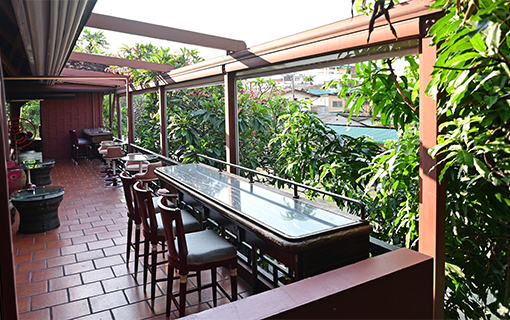
The terrace of O.S.S Restaurant on the upper floor, where visitors can sit and enjoy the view of Saen Saep Canal and Ban Krua community.
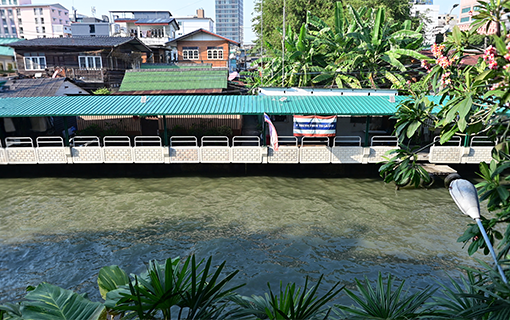
Saen Saep Canal and Ban Krua community as seen from the O.S.S restaurant terrace.
For Pacific Leisure, visiting places like this represents another side of Bangkok —
not only the modern city, but also the city of canals, wooden houses, art, silk, and history.
Sometimes, the best way to understand Thailand
is not through big landmarks,
but by slowly walking through a traditional Thai house
and seeing how art, silk, architecture, and nature live together.
If you would like to explore another side of Bangkok, the side of art, culture, canals, and traditional living, we would be happy to help you design a journey that connects museums, communities, local food, and cultural experiences.
Discover Bangkok beyond the usual places with Pacific Leisure. Travel Meaningfully. Travel Deeper.
Editor in Chief : Nampetch Siramanon
Editor: Pacific Leisure (Thailand)
Content Creator : Mr. Saroj Na Ayutthaya
Navigate
Terms & Privacy
Pacific Leisure (Thailand) Limited
No. 888/154, Mahatun Plaza Bldg., 15th Floor,
Ploenchit Road, Lumpini, Pathum Wan,
Bangkok 10330, Thailand
Phone : +66 22 542 966
Mobile : +66 63 224 1384, +66 81 138 2983
Email : info@pacificleisureth.com
Website : https://www.PacificLeisureTH.com
(TAT) Licensed No: 11/00161