
Dressed in Thai, Beneath the Full Moon
The Magic of Loy Krathong in Sukhothai and Tak
A Journey Through Thailand's Festival of Lights, Where Ancient Traditions, Flowing Rivers, and Cultural Heritage Come Alive
There is something magical about Thailand on the night of the full moon in the twelfth lunar month.
As the sun disappears beyond the horizon, temples glow with candlelight, rivers shimmer beneath the moon, and communities gather to celebrate one of the country's most beautiful traditions — Loy Krathong, Thailand's Festival of Lights.
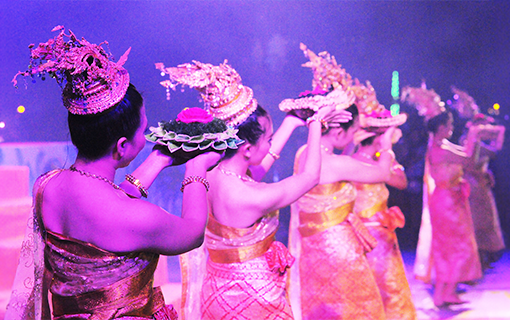
For one special evening, people dress in traditional Thai attire, carry delicately decorated floating offerings, and make their way towards rivers, lakes, and ponds. Some come to make a wish, others to express gratitude, and many simply to experience a tradition that has connected generations of Thai people.
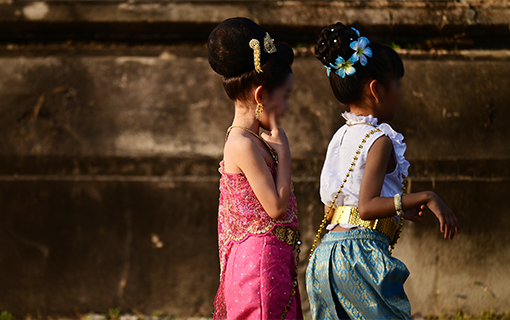
Young children dressed in colourful traditional Thai costumes bring charm and joy to the Loy Krathong celebrations at Sukhothai Historical Park.
But Loy Krathong is much more than a beautiful festival. It is a celebration of the relationship between people, nature, faith, and the waterways that have sustained Thai life for centuries.
And while the festival is celebrated throughout Thailand, two neighbouring provinces offer particularly extraordinary experiences: Sukhothai and Tak.
Separated by a relatively short distance, these two historic destinations preserve remarkably different interpretations of the same beloved tradition.
One illuminates the ancient ruins of a former kingdom with thousands of candles. The other transforms a flowing river into a breathtaking procession of a thousand flickering lights.
Both offer unforgettable journeys into the heart of Thai culture.
Loy Krathong: A Tradition of Gratitude and Light
The exact origins of Loy Krathong remain uncertain, although the festival has long been associated with Thailand's historical kingdoms, particularly Sukhothai.
At the heart of the celebration is the krathong, a small floating vessel traditionally crafted from natural materials such as banana trunks, banana leaves, and fresh flowers. A candle and incense sticks are often placed in its centre.
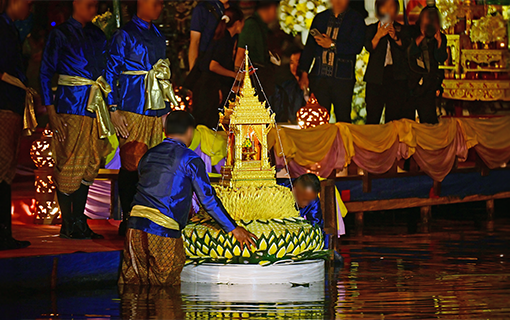
A beautifully decorated Royal Krathong displayed at Sukhothai Historical Park, reflecting the elegance of Thailand's Loy Krathong tradition.
On the full-moon night, people gently release their krathongs onto the water as a symbolic gesture of gratitude and an apology to Phra Mae Khongkha, the Goddess of Water, for the ways humans have used and sometimes harmed this precious natural resource.
For many, the ritual also represents letting go of misfortune and welcoming new beginnings.
Although the meaning remains deeply rooted in Thai beliefs, each region has developed its own distinctive customs, shaped by local history, geography, and community traditions.
Nowhere is this diversity more beautifully expressed than in Sukhothai and Tak.
Sukhothai: Where Ancient Temples Glow with a Thousand Lights
Loy Krathong Phao Thian Len Fai — The Festival of Burning Candles and Playing with Fire
Imagine walking through an ancient kingdom after sunset.
Centuries-old temple ruins rise against the night sky. Rows of candles illuminate the pathways, while their golden reflections dance across tranquil ponds. Traditional music drifts through the air, and the magnificent silhouettes of historic monuments create a scene that feels almost untouched by time.
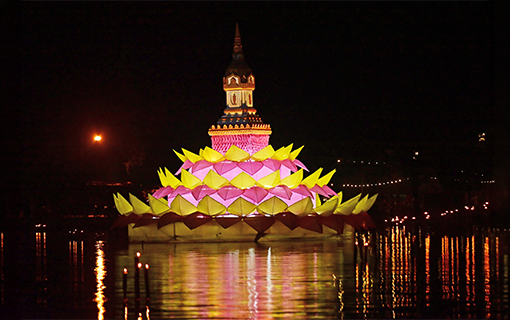
A magnificent giant Krathong floats gracefully on the tranquil waters of Sukhothai Historical Park, creating a captivating festival scene.
Welcome to Loy Krathong in Sukhothai.
Once the capital of the Sukhothai Kingdom, one of the earliest major Thai kingdoms, this historic city holds a special place in the country's cultural heritage.
Ancient inscriptions attributed to the reign of King Ramkhamhaeng refer to festivities known as Phao Thian Len Fai, meaning "Burning Candles and Playing with Fire." Although historians have not established a direct connection between those celebrations and the modern Loy Krathong festival, the tradition remains an important part of Sukhothai's cultural identity.
Today, the annual celebration takes place within Sukhothai Historical Park, part of a UNESCO World Heritage Site and one of Thailand's most remarkable archaeological treasures.
The ancient temples become the setting for a spectacular cultural experience, with traditional performances, illuminated monuments, ceremonial processions, and dramatic light-and-sound presentations bringing stories of the past to life.
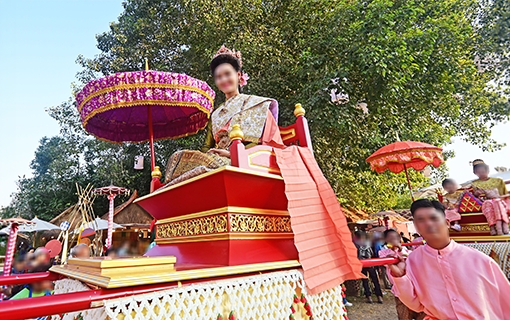
A beautifully dressed Nang Noppamas joins the traditional Loy Krathong procession at Sukhothai Historical Park, celebrating one of the festival's most iconic traditions.
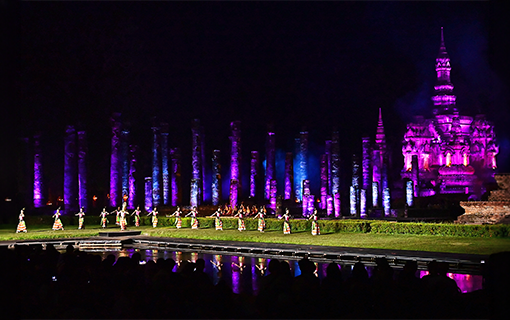
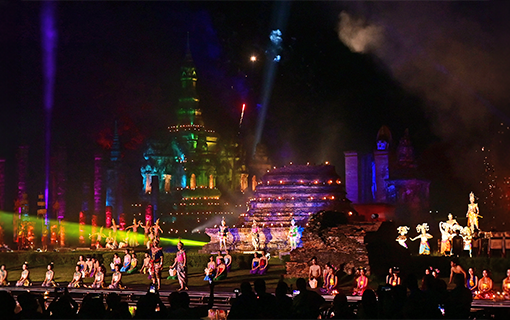
Spectacular cultural performances bring the history of Sukhothai to life during the Loy Krathong celebrations, setting the stage for a dazzling fireworks display.
It is an extraordinary sight: history, art, faith, and celebration coming together beneath the November moon.
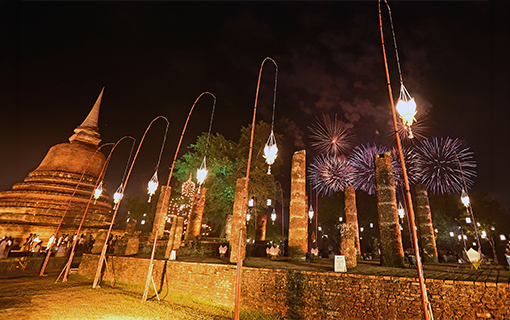
A spectacular fireworks display illuminates the night sky above Sukhothai Historical Park, marking the grand finale of the Loy Krathong celebrations.
For travellers, the experience begins long before the evening festivities.
Arriving a day or two early allows time to explore the magnificent ruins, admire the distinctive architecture, and discover the peaceful atmosphere of the old kingdom.
As night falls and the festival begins, the same monuments take on an entirely different character.
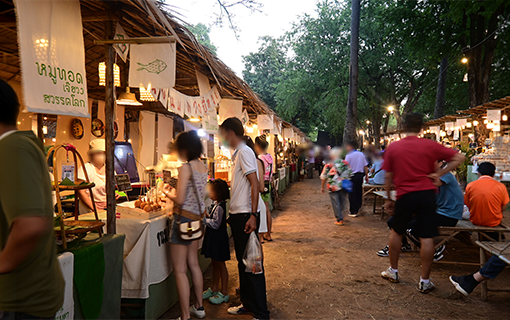
Festival stalls filled with local delicacies, traditional snacks, and souvenirs create a lively atmosphere at Sukhothai Historical Park.
If there is one Loy Krathong celebration that deserves a place on every cultural traveller's wish list, Sukhothai is certainly among them.
Tak: A Thousand Floating Lights Along the Ping River
Loy Krathong Sai Lai Prateep 1,000 Duang — The Procession of a Thousand Floating Lights
Travel west from Sukhothai to the neighbouring province of Tak, and the atmosphere changes completely.
Here, the ancient temples give way to the gentle current of the Ping River, one of the principal tributaries of the Chao Phraya River.
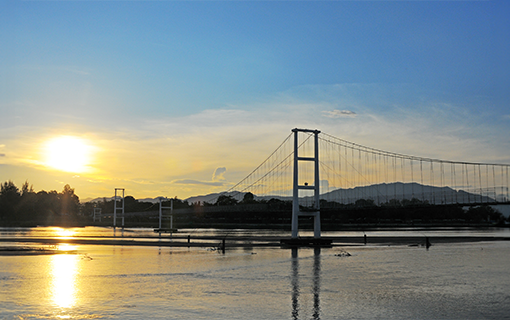
The suspension bridge across the Ping River offers a peaceful setting for an early evening stroll before the Loy Krathong Sai festivities begin — a perfect moment to enjoy the riverside atmosphere before the river comes alive with thousands of lights.
Instead of individual floral krathongs scattered across the water, the people of Tak celebrate a remarkable tradition known as Loy Krathong Sai — a continuous procession of illuminated floating offerings.
Its origins lie in the creativity and resourcefulness of local communities.
In earlier times, coconut shells were commonly left over after the flesh had been removed for preparing local food, including miang, a traditional snack associated with Tak.
Rather than allowing these shells to go to waste, villagers discovered that they could be transformed into floating lamps.
They placed cotton wicks and beeswax candles inside the hollow shells, creating simple yet beautiful vessels that could float along the river.
The use of beeswax carried spiritual significance, as it was traditionally associated with Buddhist religious ceremonies and believed to bring blessings and good fortune.
What began as a practical use of local materials gradually developed into one of Thailand's most distinctive cultural celebrations.
Today, the tradition is celebrated through community participation and competitions, with teams carefully preparing and releasing their illuminated coconut-shell krathongs onto the Ping River.
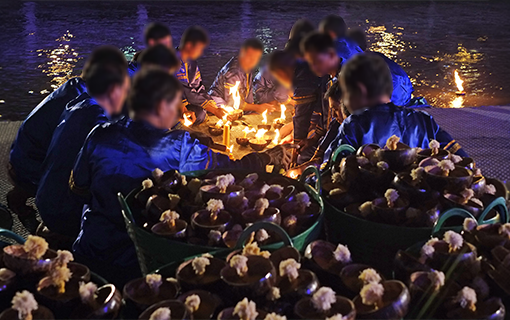
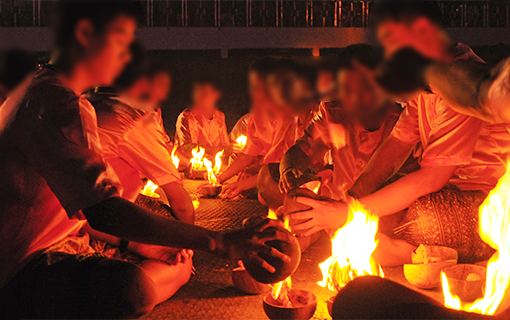
Local participants carefully light candles inside coconut shells, preparing hundreds of floating lamps for the enchanting Loy Krathong Sai procession along the Ping River in Tak.
One by one, the tiny flames drift downstream.
Then something remarkable happens.
As the river carries the floating lamps forward, hundreds of individual lights form a continuous, glowing ribbon across the dark water.
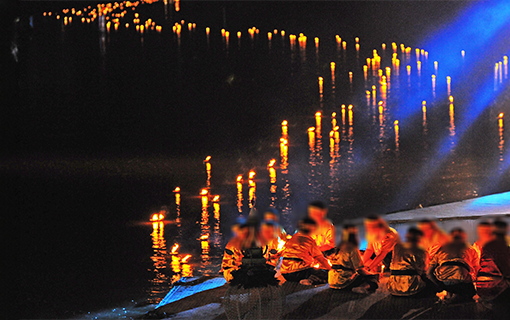
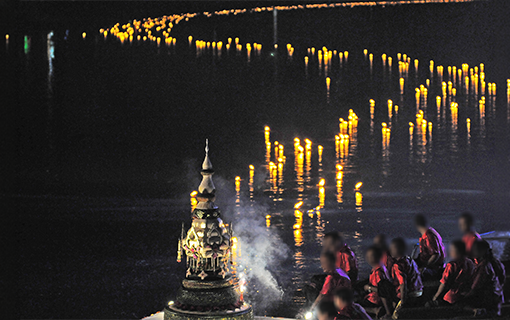
Glowing coconut-shell krathongs are gently released from the riverside performance platform, forming a beautiful stream of flickering lights along the Ping River in Tak.
From the riverbank, the sight resembles a golden necklace moving gently with the current — a breathtaking display created not by modern technology but through nature, craftsmanship, and generations of local knowledge.
The festivities also bring the city of Tak to life, with traditional processions, elaborate ceremonial krathongs, cultural performances, and local communities proudly showcasing their heritage.
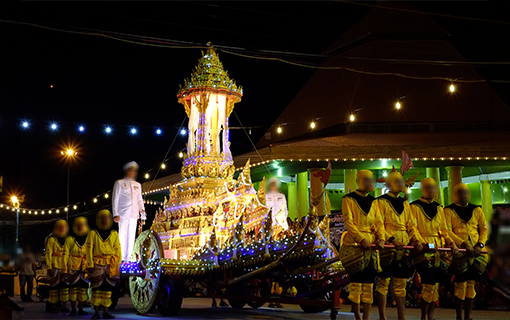
The grand Royal Krathong procession makes its way along the banks of the Ping River in Tak, celebrating the province's distinctive Loy Krathong Sai tradition.
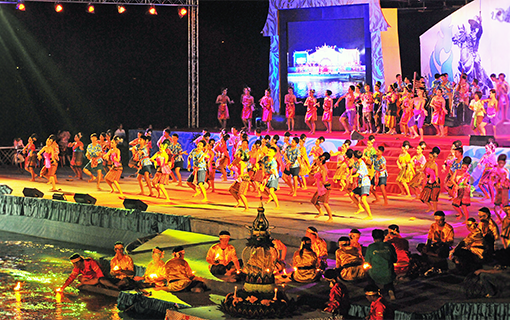
A mesmerising ribbon of illuminated krathongs floats along the Ping River as traditional performances unfold on stage, while spectators gather along the riverbanks to enjoy Tak's spectacular Loy Krathong Sai celebration.
For visitors, watching a thousand tiny flames travel together along the Ping River is an experience that photographs can capture only in part.
The real magic lies in being there, surrounded by the sounds, reflections, and shared excitement of the celebration.
Two Provinces, Two Traditions, One Unforgettable Experience
What makes Sukhothai and Tak so special is not simply the beauty of their Loy Krathong festivals, but the stories behind them.
In Sukhothai, the celebration is woven into the magnificent setting of an ancient kingdom, where historic temples and illuminated performances transport visitors into Thailand's past.
In Tak, the tradition belongs to the river and the communities who have learned to transform humble coconut shells into a dazzling procession of light.
Each destination offers a different perspective on Thai culture, yet both share the same spirit of gratitude, creativity, and respect for tradition.
The timing makes the journey even more appealing.
Loy Krathong falls during Thailand's cooler season, when the arrival of gentle winter breezes makes evening strolls, riverside celebrations, and exploring historic towns especially enjoyable.
It is also one of the loveliest times to see people wearing traditional Thai clothing.
Beautiful silk garments, colourful traditional skirts, and elegant Thai-inspired outfits become part of the festive atmosphere, adding warmth and character to the occasion.
For travellers wishing to immerse themselves in local culture, dressing in traditional Thai attire can make the celebration feel even more memorable.
Plan Your Loy Krathong Journey in 2026
In 2026, Loy Krathong falls on Tuesday, 24 November, the full moon of the twelfth month of the Thai lunar calendar.
Two of the most distinctive celebrations take place in neighbouring provinces:
Sukhothai — Loy Krathong and Candle Festival
- Dates: 15–24 November 2026
- Location: Sukhothai Historical Park
- Highlights: Illuminated historical monuments, traditional performances, ceremonial processions, fireworks, and spectacular light-and-sound shows.
Tak — Loy Krathong Sai, the Thousand Floating Lights Festival
- Dates: 21–24 November 2026
- Location: Ping River, Mueang Tak, near the Rattanakosin Bicentennial Bridge
- Highlights: Coconut-shell floating lamps, cultural processions, community competitions, traditional performances, and riverside celebrations.
For those planning a longer cultural journey, the two provinces offer an opportunity to experience different expressions of the same festival while discovering the historical landscapes and local traditions of northern Thailand.
Whenever possible, consider arriving before the main festival night to explore Sukhothai's historical treasures and enjoy the atmosphere of Tak's riverside communities.
And as you celebrate, choose environmentally responsible ways to participate, helping preserve the waterways at the heart of this meaningful tradition.
When the Full Moon Becomes a Memory
There are moments in travel that remain with us long after the journey has ended.
The sight of candlelight flickering against centuries-old temples. The gentle movement of a thousand floating lamps along a river. The sound of traditional music beneath a bright November moon.
And perhaps, most memorably, the warmth of the people who continue to share these traditions with the world.
Loy Krathong is not simply a festival to watch.
It is a story to experience, a heritage to appreciate, and a beautiful reminder of the connection between people and nature.
So when the next full moon illuminates Thailand's waterways, why not take a journey beyond the familiar?
Dress in Thai, follow the candlelight, and discover the timeless magic of Sukhothai and Tak.
Because sometimes, the most beautiful journeys are the ones that bring us closer to the heart of a culture.
Discover the stories, traditions, and authentic experiences of Thailand with Pacific Leisure.
Editor in Chief : Nampetch Siramanon
Editor: Pacific Leisure (Thailand)
Content Creator : Mr. Saroj Na Ayutthaya
Navigate
Terms & Privacy
Pacific Leisure (Thailand) Limited
No. 888/154, Mahatun Plaza Bldg., 15th Floor,
Ploenchit Road, Lumpini, Pathum Wan,
Bangkok 10330, Thailand
Phone : +66 22 542 966
Mobile : +66 63 224 1384, +66 81 138 2983
Email : info@pacificleisureth.com
Website : https://www.PacificLeisureTH.com
(TAT) Licensed No: 11/00161