Beyond the Splash: Songkran Traditions in Local Communities
Just a short journey from Bangkok, Koh Kret offers one of the most authentic and culturally rich Songkran experiences in Thailand — the Swan Pole and Centipede Flag Procession, a unique Mon community tradition that has been preserved for generations.
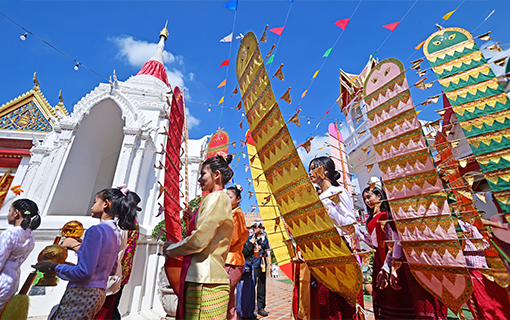
The Swan Pole and Centipede Flag Procession at Wat Paramaiyikawat, Koh Kret, Nonthaburi. This important Songkran tradition of the Mon community involves a ceremonial procession of colorful flags to be offered as a Buddhist merit-making ritual by raising them onto the sacred swan poles — a unique cultural symbol of Mon temples in Thailand.
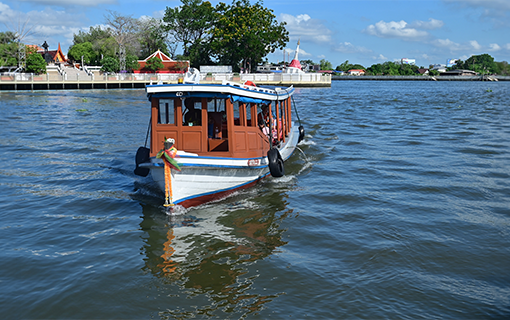
Local ferry crossing from Wat Sanam Nuea to Koh Kret — a short and simple boat ride that connects the mainland to the island community.
While Songkran across Thailand is widely known for water splashing, on Koh Kret, the festival remains deeply spiritual and cultural. The day begins with traditional rituals such as bathing Buddha images, paying respect to elders, and visiting temples. But what makes Koh Kret truly special is that the “Hae Hong Thong Takrab” procession is a ceremonial parade of colorful flags offered as a Buddhist merit-making tradition.
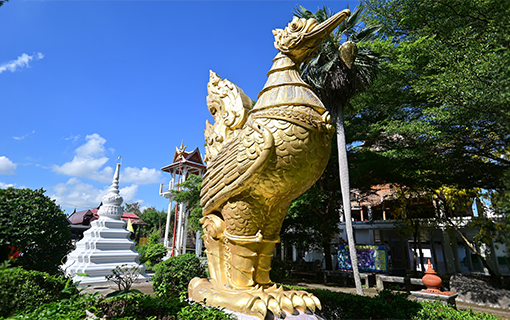
The swan sculpture at Wat Phai Lom, Koh Kret — the starting point of the Centipede Flag procession.
A Living Mon Cultural Tradition
The Mon people, who settled on Koh Kret over 200 years ago, brought with them their religious art, architecture, and traditions. One of their most recognizable symbols is the Hong (Swan), which is a sacred symbol in Mon Buddhist culture. Many Mon temples feature a tall swan pole standing within the temple grounds.
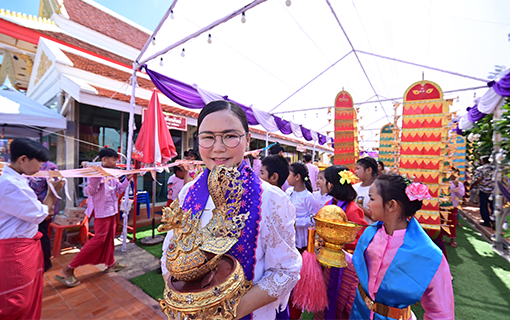
The procession is led by a jeweled metal swan — a symbol representing the Mon people and their cultural heritage


Scenes from the colorful and joyful Centipede Flag procession during the Songkran festival.
During Songkran, villagers create long, colorful “Centipede Flags”, named after their long shape with decorative pointed edges resembling a centipede’s tail. These flags are handmade by the community, often sewn and decorated together in the temple before the festival day.
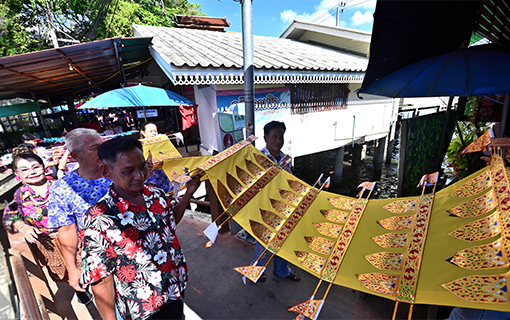
The flag procession passing through the local community, accompanied by music and villagers joining the ceremony.
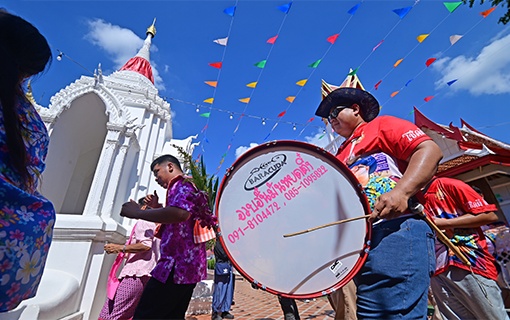
The traditional marching band, known locally as a “Taer Wong,” brings energy, rhythm, and festive spirit to the procession.
On April 13 each year, the community gathers for a joyful yet meaningful procession. The parade moves through the small village paths accompanied by traditional Thai marching band music, before arriving at Wat Paramaiyikawat, the most important temple on Koh Kret. The flags are then ceremonially raised onto the swan pole as an offering to Buddhism.

The procession circling the ordination hall before the ceremonial flag raising ritual.
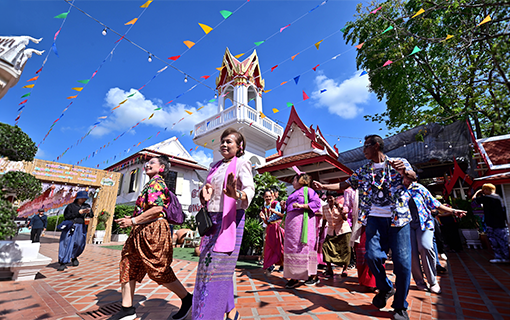
Traditional dancing at the front of the procession — an essential part of the celebration and community participation.
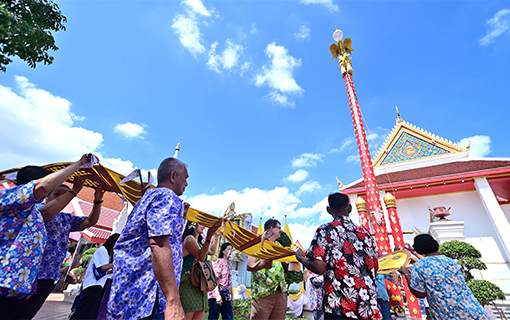
Children, adults, Mon people, Thai people, and visitors from around the world can all join the procession and take part in the merit-making ceremony together.
The atmosphere is simple, sincere, and full of community spirit is a rare cultural experience that feels very different from modern city celebrations.
Wat Paramaiyikawat and the Leaning Mon Chedi
While visiting the festival, travellers should also visit Wat Paramaiyikawat, a royal temple and the cultural heart of Koh Kret. The temple is famous for the Leaning Mon Chedi (Mutao Chedi), a white Mon-style pagoda located at the tip of the island. The chedi is over 300 years old and has tilted over time due to river erosion, becoming one of Koh Kret’s most iconic landmarks and a registered national heritage site.

The Leaning Mutao Chedi at Wat Paramaiyikawat, located at the tip of Koh Kret island, is one of the island’s most iconic landmarks and an important heritage site of the Mon community.
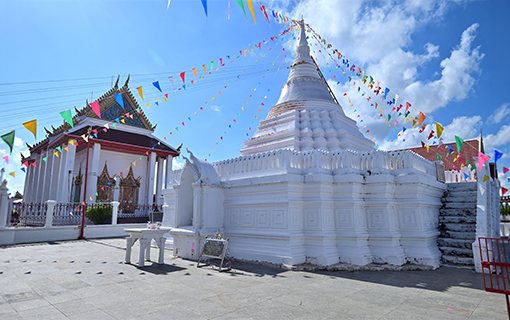
A chedi enshrining sacred Buddha relics located behind the temple’s main ordination hall, a place of respect and worship for visitors and local residents.
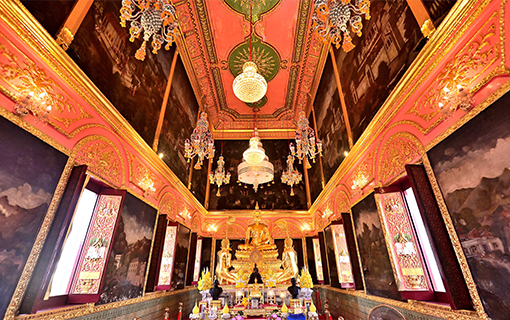
The principal Buddha image and contemporary Buddhist art inside the ordination hall at Wat Paramaiyikawat.
Visiting Koh Kret During Songkran
To attend the procession, visitors usually park near Wat Sanam Nuea in Pak Kret and take a short ferry across the river to Koh Kret. It is recommended to arrive early, visit the temple, pay respect at the chedi, and then walk to the procession starting point before the parade begins.

The Centipede Flags are raised onto the swan poles in front of the ordination hall as a Buddhist offering
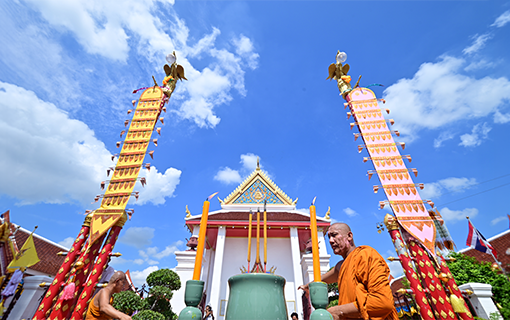
More flags are raised onto the swan poles behind the ordination hall, completing the ceremonial ritual.
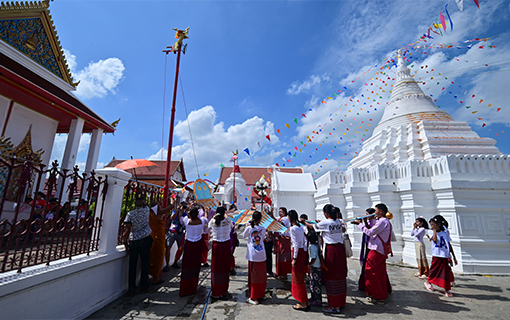
Centipede flags displayed on the swan poles in front of the ordination hall.

Centipede flags raised near the relic chedi behind the ordination hall.
Beyond the festival, Koh Kret is also known for:
- Mon-style temples and architecture
- Handmade pottery and local crafts
- Riverside restaurants and cafés
- Traditional Thai and Mon desserts and snacks
- A peaceful walking path around the island
On weekends and holidays, the island becomes lively with local markets and food stalls, making it a perfect cultural day trip from Bangkok.
A Different Kind of Songkran
The Swan and Centipede Flag Procession is not a large tourist festival.
It is small, simple, and deeply meaningful, a celebration of faith, community, and heritage.
For travellers looking for authentic cultural experiences near Bangkok, Koh Kret during Songkran is one of the most memorable places to visit.
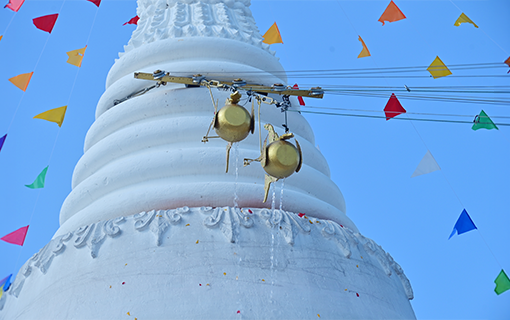
Bathing the chedi with scented water using a swan-shaped bucket lifted by a pulley — a traditional Songkran ritual.
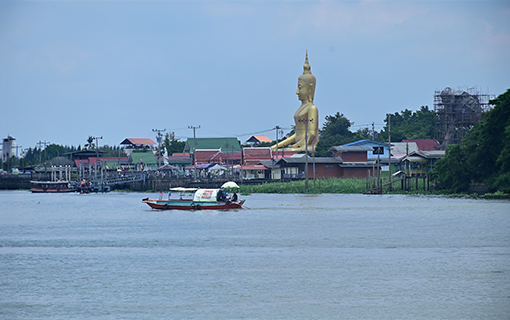
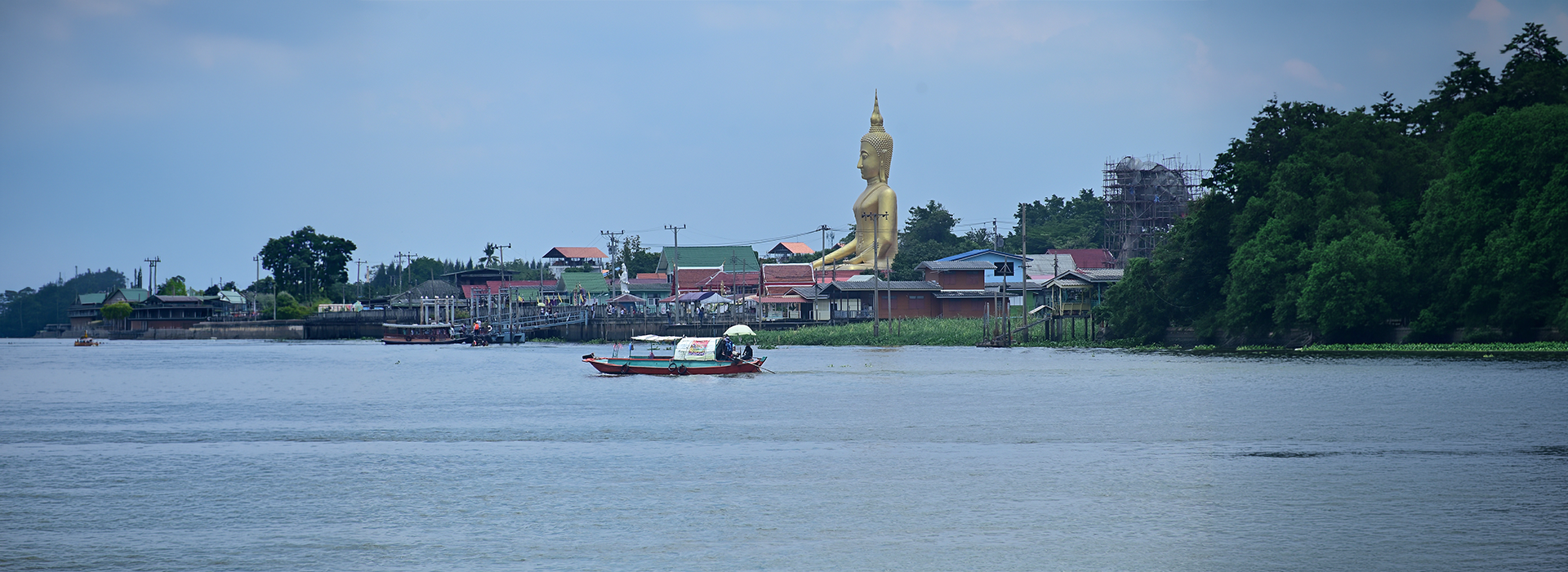
View of the Chao Phraya River and Luang Pho Toh at Wat Bang Chak, seen from a riverside restaurant on Koh Kret — a peaceful end to a cultural day on the island.
Editor in Chief : Nampetch Siramanon
Editor: Pacific Leisure (Thailand)
Content Creator : Mr. Saroj Na Ayutthaya
Navigate
Terms & Privacy
Pacific Leisure (Thailand) Limited
No. 888/154, Mahatun Plaza Bldg., 15th Floor,
Ploenchit Road, Lumpini, Pathum Wan,
Bangkok 10330, Thailand
Phone : +66 22 542 966
Mobile : +66 63 224 1384, +66 81 138 2983
Email : info@pacificleisureth.com
Website : https://www.PacificLeisureTH.com
(TAT) Licensed No: 11/00161