An Unconventional Hilltop Temple near Khao Yai
Beyond the well-known waterfalls, viewpoints and forest trails of Khao Yai National Park, the surrounding area of Mu Si and Pak Chong offers another kind of journey, one that leads travellers into local history, faith, art and imagination.
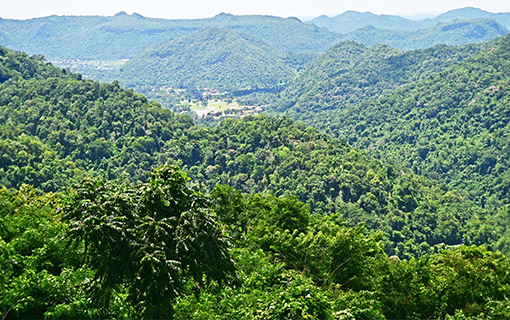
A scenic view of the forest landscape and part of Mu Si Subdistrict, Pak Chong District, Nakhon Ratchasima, captured from the KM 30 viewpoint inside Khao Yai National Park.
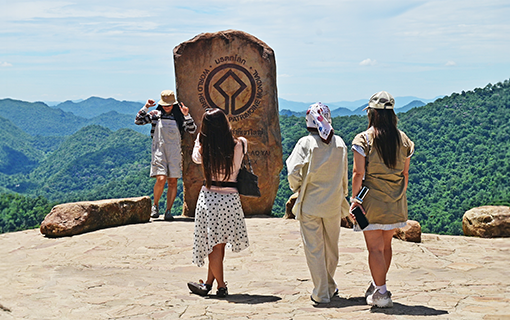
The World Heritage sign is located near the cliffside viewpoint at KM 30 in Khao Yai National Park.
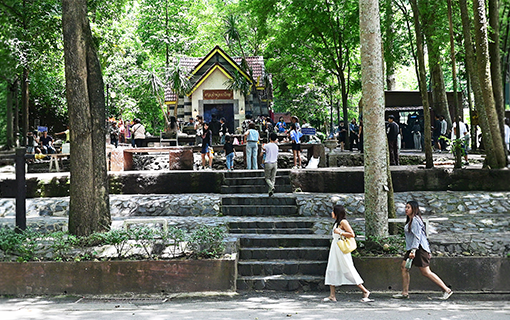
The shrine of Chao Por Khao Yai, a revered guardian spirit shrine located near the entrance to Khao Yai National Park.
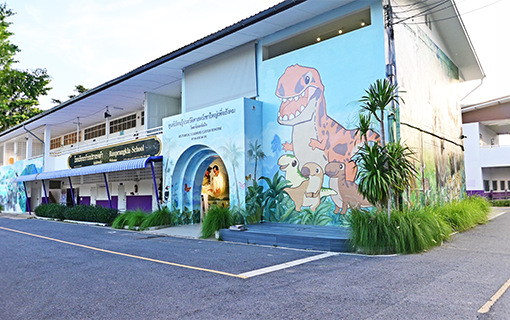
The Khao Yai Historical Learning Center for Society is located within Prang Kla School.
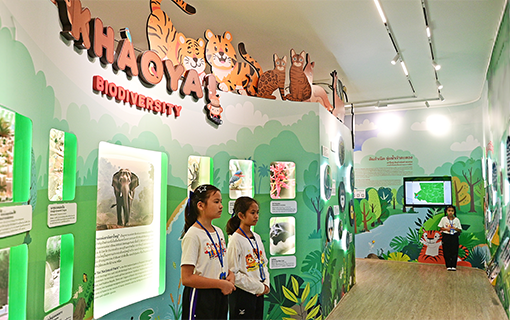
Young local guides sharing stories and knowledge at the Khao Yai Historical Learning Center for Society inside Prang Kla School.
Wat Simalai Songtham is one of the most distinctive cultural sites near Khao Yai. Set on a limestone hill, the temple immediately captures attention with its striking collection of sculptures, cave-like halls, and hilltop architecture overlooking the countryside of Nakhon Ratchasima.
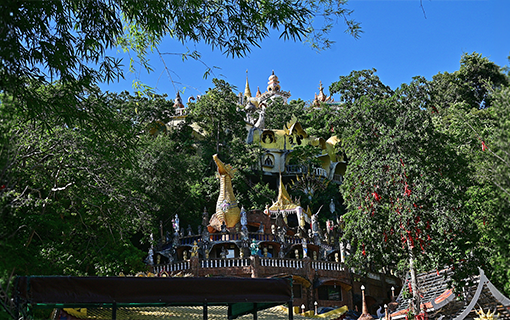
Wat Simalai Songtham is seen from the lower ground, revealing its striking hilltop structures and sculptures.
From a distance, visitors can already see Buddhist images, mythical creatures, elephants, dragons, naga serpents, and other symbolic figures rising from the hillside.
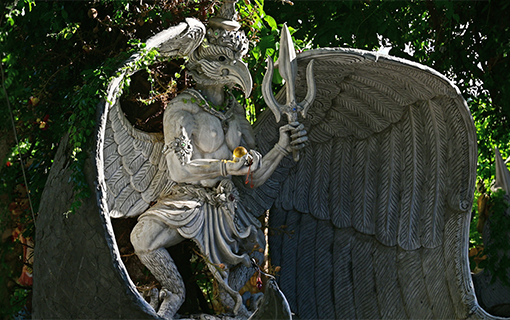
A Garuda sculpture set amid the shaded garden at the lower area of Wat Simalai Songtham.
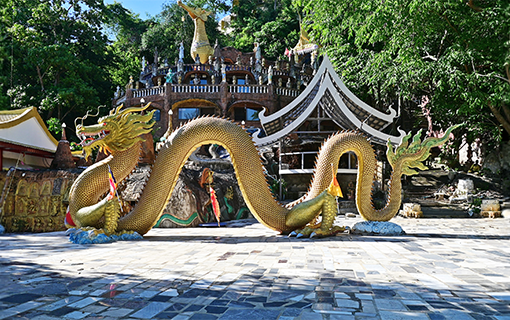
The golden dragon, one of the most complete and impressive sculptures within Wat Simalai Songtham.
Seen from the nearby road or expressway, the shrine immediately stands out with its graceful presence. But beyond its beauty, this is a place filled with meaning, a space where faith, compassion, art, and community spirit come together.
As the journey continues upward, the temple reveals itself as a layered world of spiritual art, part Buddhist sanctuary, part mountain cave, part open-air sculpture gallery.
What makes Wat Simalai Songtham truly remarkable is its unusual artistic composition. The temple brings together a wide range of visual influences, from Buddhist and Thai mythical figures to Chinese-style sculptures, guardian deities and imaginative symbolic forms. Built around a natural limestone formation, the site creates the feeling of “a cave within a cave”, where man-made structures blend with the mountain’s natural character.
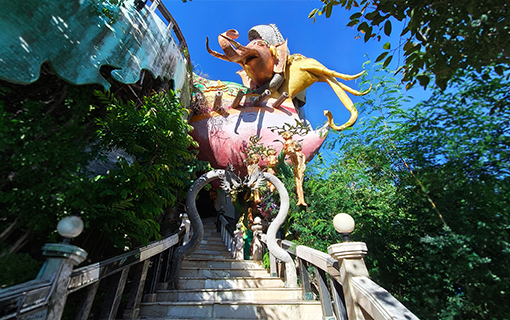
The stairway leading up to the Three-Headed Elephant and Naga sculpture area, the first viewpoint of the temple.
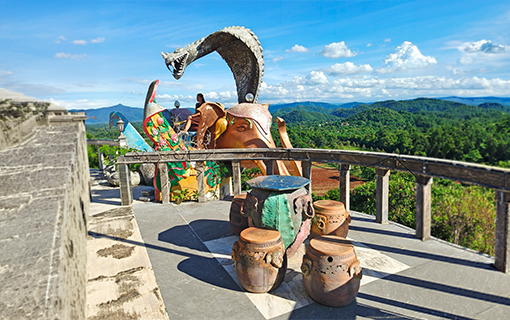
The Three-Headed Elephant and Naga viewpoint, offering a panoramic perspective of the surrounding landscape.
Visitors may choose to walk up the stairway or take the temple’s local pickup service part of the way up the hill before continuing on foot. At the higher level, the reward is a panoramic view of rice fields, orchards, mountains, and local communities spread across the valley below.
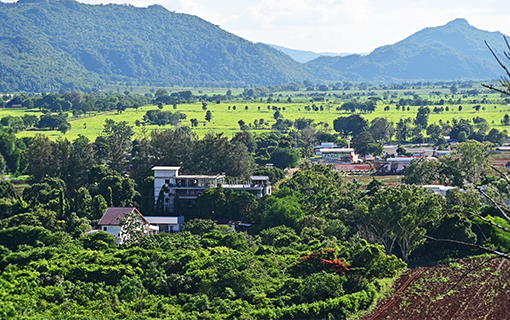
A scenic view of Khao Yai’s landscape from a hilltop viewpoint at Wat Simalai Songtham.
A walk through the temple is an exploration of hidden chambers, cave halls, and unexpected artistic details.
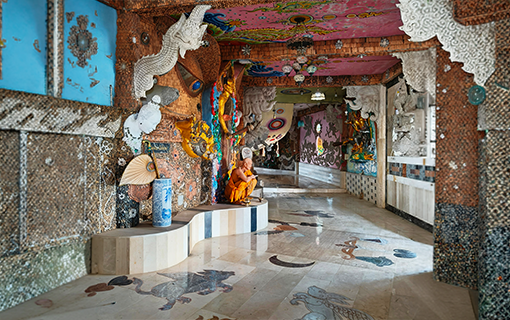
A colourful hall featuring a statue of Luang Por Khun Parisuttho, one of Nakhon Ratchasima’s most respected Buddhist monks.
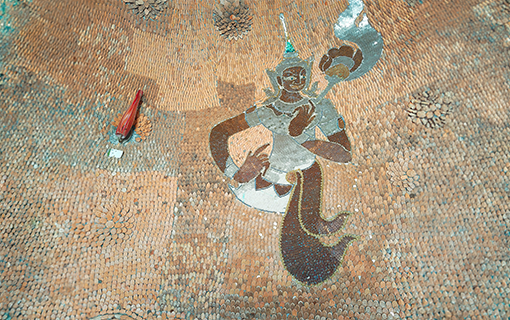
A cave wall decorated with clay amulets and coins, reflecting local faith and devotional art.
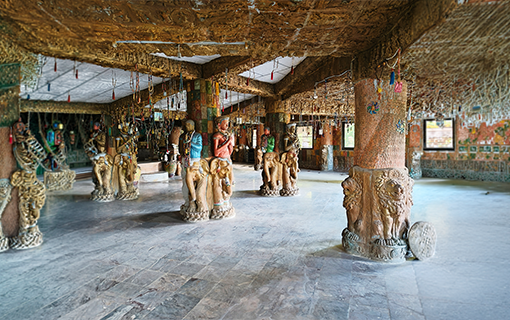
A unique chamber where the ceiling and pillars are decorated with numerous prayer bead necklaces.
Some areas remain under development, giving the site a raw and evolving character. While the architecture may not follow the familiar layout of a traditional Thai temple, the presence of Buddha images at the highest point of the complex reflects its spiritual foundation and Buddhist identity.
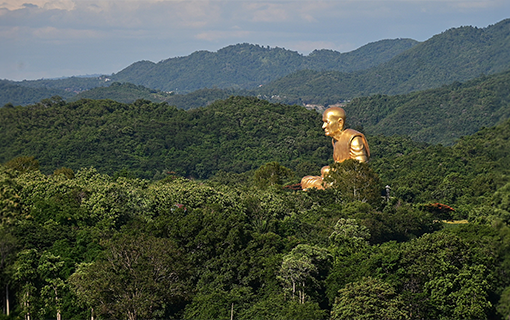
A view of the large Luang Pu Thuat statue standing amid the forest, part of the Luang Pu Thuat Buddhist Park area.
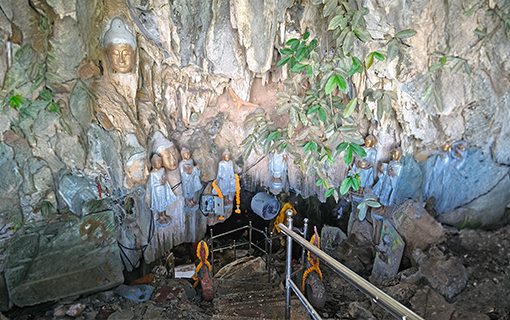
The entrance to a natural cave within the mountain is used as a resting and meditation area for monks.
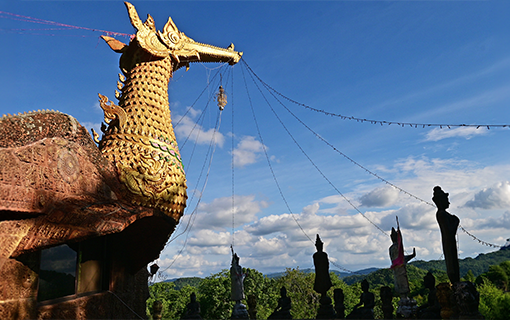
A Hong sculpture inspired by the Royal Barge Suphannahong, surrounded by Buddha images in various postures.
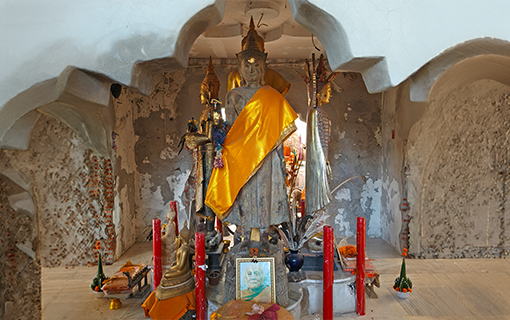
Buddha images are enshrined inside the dome at the highest point of the mountain, forming a spiritual highlight of Wat Simalai Songtham.
For travellers seeking something beyond the usual Khao Yai itinerary, Wat Simalai Songtham offers a memorable cultural experience, mysterious, artistic, unconventional, and deeply connected to the landscape around it.
Suggested Cultural Journey
A visit to Wat Simalai Songtham can be combined with nearby cultural and nature-based experiences around Khao Yai. Travellers may begin the day with a scenic drive through the lush green landscape of Mu Si, stop at a local viewpoint near Khao Yai National Park, pay respect at the Khao Yai guardian shrine, and continue to local learning centres or community-based attractions before visiting the temple in the afternoon.
This one-day cultural route is ideal for travellers who wish to experience Khao Yai from a different perspective, not only as a national park destination, but also as a living landscape of local stories, faith, art and community.
Experience Highlights
- Explore one of the most unusual hilltop temples near Khao Yai
- Discover a fascinating mix of Buddhist, Thai, Chinese, and mythical sculptures
- Walk through cave-like halls built around a limestone hill
- Enjoy panoramic views of mountains, orchards, and local villages
- Combine the visit with cultural learning, local food, and scenic countryside routes
Recommended For
Cultural travellers, photography lovers, repeat visitors to Khao Yai, spiritual travellers, art and architecture enthusiasts, and groups looking for a unique one-day experience near Bangkok.
Travel with Pacific Leisure
Pacific Leisure designs meaningful journeys that connect travellers with Thailand’s cultural landscapes, local communities and hidden destinations. From well-known landmarks to lesser-known places of discovery, each journey is curated with care, local insight and a deeper sense of place.
Editor in Chief : Nampetch Siramanon
Editor: Pacific Leisure (Thailand)
Content Creator : Mr. Saroj Na Ayutthaya
Navigate
Terms & Privacy
Pacific Leisure (Thailand) Limited
No. 888/154, Mahatun Plaza Bldg., 15th Floor,
Ploenchit Road, Lumpini, Pathum Wan,
Bangkok 10330, Thailand
Phone : +66 22 542 966
Mobile : +66 63 224 1384, +66 81 138 2983
Email : info@pacificleisureth.com
Website : https://www.PacificLeisureTH.com
(TAT) Licensed No: 11/00161